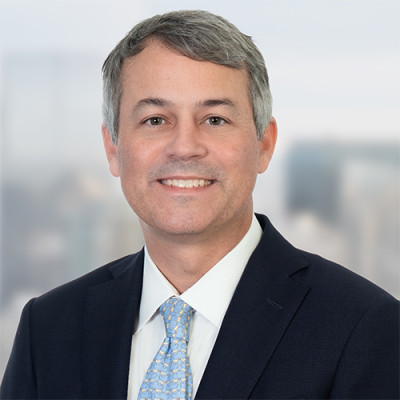
Photo of James Stevens

James is the co-leader of the firm’s Financial Services Industry Group. He has significant experience working with clients across the entire financial services sector, regularly working with public and private companies such as banks, neobanks, marketplace lenders, and other fintech and financial services providers and partners.

Thursday, November 6 • 8:30 a.m. – 3:30 p.m. ET

Register Here

Troutman Pepper Locke is proud to sponsor the Community Bankers Association of Georgia’ 2025 Tech Talk – North conference, being held on November 6 in Atlanta, Georgia. James Stevens, co-leader of Troutman Pepper Locke’s Financial Services Industry Group, will be presenting on Regulatory

On October 8, the Office of the Comptroller of the Currency (OCC), in collaboration with the Financial Crimes Enforcement Network (FinCEN), the Board of Governors of the Federal Reserve System, the Federal Deposit Insurance Corporation, and the National Credit Union Administration, released a set of frequently asked questions (FAQs) concerning Suspicious Activity Reports (SARs). These FAQs aim to clarify regulatory requirements related to SARs, assisting financial institutions in fulfilling their compliance obligations while optimizing resources for activities that provide the greatest value to law enforcement and other government users of Bank Secrecy Act (BSA) reporting.

On October 7, the Office of the Comptroller of the Currency (OCC) and the Federal Deposit Insurance Corporation (FDIC) unveiled two significant notices of proposed rulemaking (NPRs) designed to reshape the regulatory landscape for financial institutions. The first NPR aims to eliminate the use of reputation risk as a basis for regulatory actions, thereby reducing subjectivity in supervisory programs. This proposed rulemaking responds to concerns expressed in Executive Order 14331, Guaranteeing Fair Banking for All Americans, that the use of reputation risk can be a pretext for restricting law-abiding individuals’ and businesses’ access to financial services on the basis of political or religious beliefs or lawful business activities. The second NPR seeks to establish a clear definition of “unsafe or unsound practice” and revise the framework for issuing Matters Requiring Attention (MRAs) and other supervisory communications, with a focus on material financial risks. As of now, “unsafe or unsound practice” is not defined in the statute.

On October 6, the Office of the Comptroller of the Currency (OCC) announced a series of significant actions aimed at reducing the regulatory burden on community banks. These initiatives are part of the OCC’s ongoing efforts to tailor its regulatory and supervisory frameworks, thereby promoting economic growth and allowing community banks to better serve their

Wednesday, October 8 • 8:00 a.m. – 4:15 p.m. ET
Register Here

James Stevens, co-leader of Troutman Pepper Locke’s Financial Services Industry Group, will be presenting at the Banking Beyond Boundaries: Fintech and Financial Innovation Conference, hosted by the Bank of North Dakota, on Wednesday, October 8. James will be speaking on a panel discussing

On September 8, the Office of the Comptroller of the Currency (OCC) took significant action to “depoliticize” the federal banking system by issuing two bulletins to banks that further the goals of Executive Order 14331 “Guaranteeing Free Banking for All Americans” (discussed here). The OCC’s press release announcing the bulletins explains that they are aimed at eliminating politicized or unlawful debanking practices and ensuring that banks provide access to financial services based on objective, risk-based analyses rather than political or religious beliefs. Bulletin 2025-22 clarifies how politicized or unlawful debanking will be assessed in licensing applications and Community Reinvestment Act (CRA) performance evaluations. Bulletin 2025-23 reminds banks of their legal obligations under the Right to Financial Privacy Act (RFPA) to protect customer financial records and ensure proper use of Suspicious Activity Reports (SARs).

On August 15, the Federal Reserve Board announced a significant shift in its approach to supervising novel activities within banking organizations. The Board decided to sunset its Novel Activities Supervision Program, which was initially established to enhance oversight of activities related to crypto-assets, distributed ledger technology (DLT), and complex partnerships with non-banks. This program, launched in 2023, aimed to address the unique risks posed by these innovative financial activities, ensuring they were appropriately managed within the banking sector.